
05 / TYPE RATING & JET CONVERSION
TRANSPORT AIRFRAME TRANSITION // INDEPENDENT ADVISORY
Commanding the
Commercial Jet Flight Deck.
A type rating is an aircraft-specific qualification required to operate designated multi-crew or complex aircraft. AMS Aviation provides independent advisory to help candidates evaluate aircraft type selection and navigate Type Rating institute options worldwide.
05.1 / AIRFRAME COMPARISON
COMMERCIAL JET ARCHITECTURE // DUAL FLIGHT DECK PHILOSOPHIES
Two Flight Decks.
Distinct Philosophies.
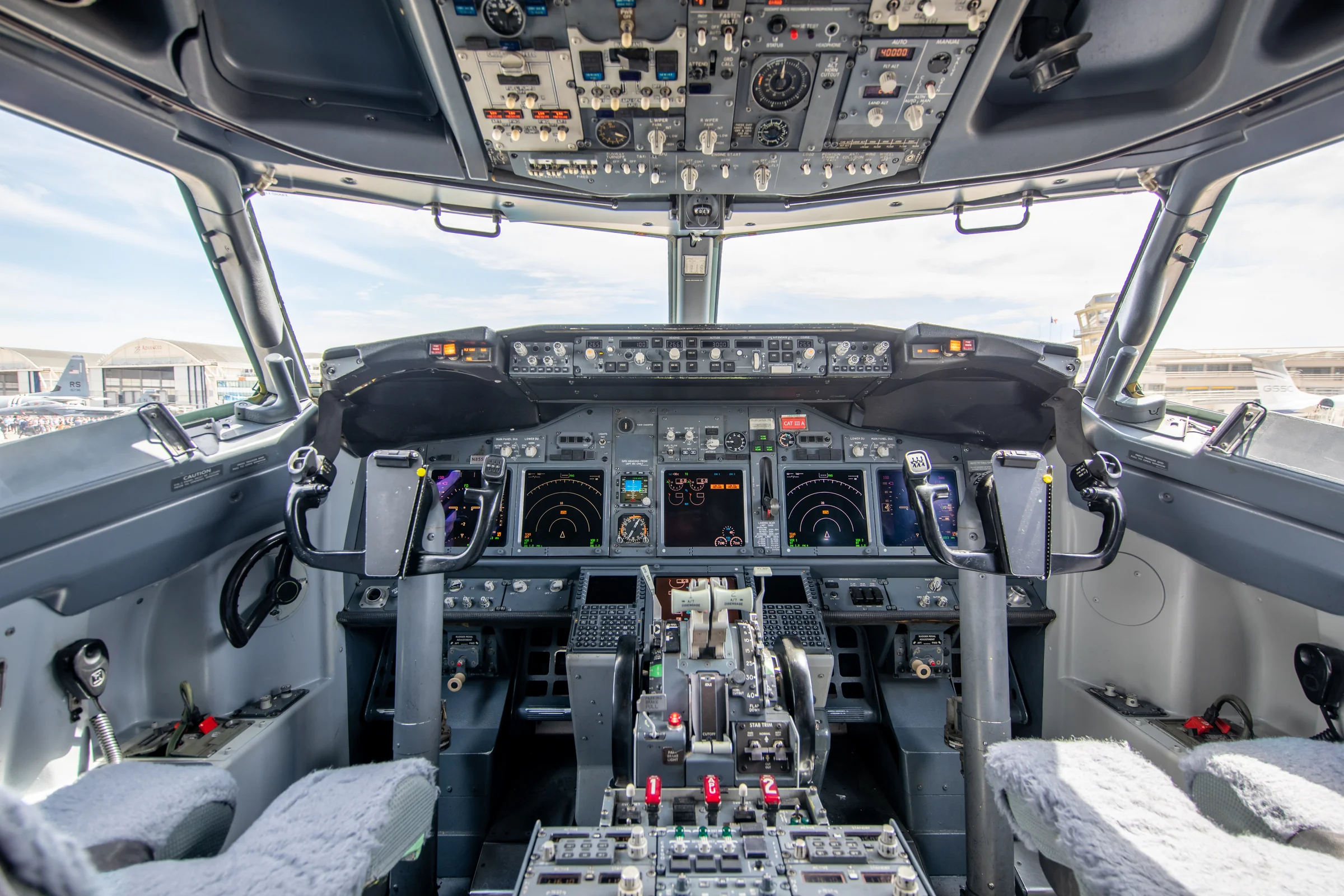
The commercial airline sector is largely anchored by two dominant narrow-body airframe families: the Boeing 737 and the Airbus A320. While both fulfill similar commercial missions, they approach flight-deck ergonomics, control interfaces, and automation integration from fundamentally different engineering perspectives.
Boeing 737 Architecture
737 Next Generation (NG) & 737 MAX Families
Interconnected Control Columns & Yokes
Dual mechanically interconnected control columns and yokes provide artificial feel and direct tactile feedback. Pitch trim is operated via electric thumb switches on the yoke or manual trim wheels on the control stand.
Overhead System Panels & EFIS Display Units
Integrated Electronic Flight Instrument System (EFIS) paired with an overhead system switchboard. Primary Flight Displays (PFD) and Navigation Displays (ND) are configured alongside dual Control Display Units (CDU/FMC) on the pedestal.
Autothrottle-Driven Moving Thrust Levers
The 737 autothrottle system physically positions the thrust levers via servomotors in response to commanded thrust, providing visual and physical lever displacement. Flight crew can manually override or adjust thrust lever position directly.
Conventional Flight Envelope & Tactile Feedback
Type rating courses for the 737 family are offered by training organisations internationally, emphasizing standard operating procedures, multi-crew coordination, and aircraft handling.
One of the most widely operated narrow-body airframe families in commercial aviation history, serving short-to-medium haul domestic and regional airline routes worldwide.
05.2 / TECHNICAL EDUCATION
AIRCRAFT-SPECIFIC QUALIFICATION // INDUSTRY PERSPECTIVE
Why Aircraft-Specific
Qualification Matters.
A commercial pilot license establishes essential aeronautical competence, but transport-category commercial airliners operate under entirely different operational demands. Understanding the rationale behind type qualification clarifies the learning curve awaiting new airline first officers.
Class Rating vs. Type Rating
Foundational flight training certifies pilots on general aircraft classes. In commercial air transport, whether an aircraft requires an individual type endorsement depends on applicable civil aviation licensing regulations, airframe complexity, and aircraft operational classification.
Because transport-category airliners feature dedicated system architectures, specialized flight deck procedures, and distinct handling profiles, flight crew must complete comprehensive aircraft-specific qualification before operating the airframe in airline service.
Single-Pilot to Multi-Crew Command
Initial pilot training primarily evaluates single-pilot command. Operating a commercial transport airliner introduces a structured multi-crew environment governed by standardized communication, mutual cross-checks, and Crew Resource Management (CRM).
Flight duties are divided into distinct roles: Pilot Flying (PF), responsible for trajectory and energy management, and Pilot Monitoring (PM), responsible for checklist reading, ATC communications, and system verification.
High-Energy Jet Management
Transitioning to commercial jets requires managing significantly higher cruising speeds, high-altitude aerodynamic regimes, and swept-wing flight characteristics that behave differently from light training aircraft.
Pilots must learn to interact with sophisticated Flight Management Systems (FMS), automated thrust control, and integrated flight directors, developing the judgment to seamlessly balance automation with manual flight skills.
Because a type rating represents a significant educational and financial commitment, AMS Aviation encourages aspiring pilots to evaluate airframe characteristics and airline fleet trends carefully before pursuing an aircraft-specific qualification.
05.3 / PEDAGOGY & SIMULATION
INDUSTRY TRAINING CONCEPTS // COCKPIT PREPARATION
The Type Rating
Learning Perspective.
Transitioning to an airline transport airframe is structured around progressive pedagogical layers. In global aviation training, candidate preparation combines rigorous systems familiarisation, standardised cockpit procedures, and simulator-based scenario management.
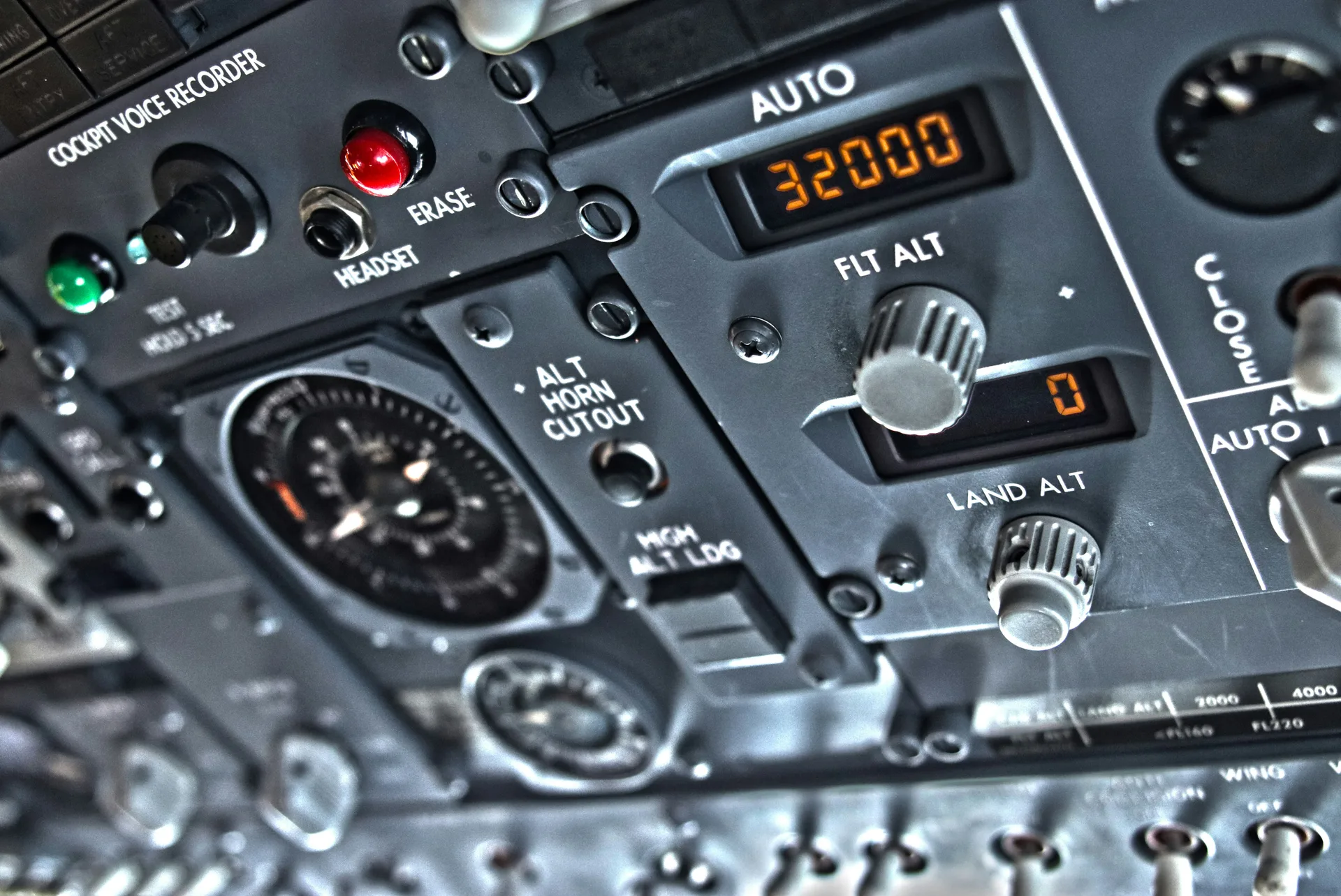
Global civil aviation training relies on high-fidelity simulation to build situational awareness and muscle memory, allowing aviators to experience complex flight regimes within a safe, controlled environment.
Aircraft Systems Familiarisation
Before stepping into any flight training device, pilots master the technical architecture of the specific aircraft. This includes in-depth study of electrical generation, multi-channel hydraulic redundancy, pneumatic bleed systems, fuel distribution, pressurization schedules, and digital flight control computers.
Flight-Deck Procedures & SOPs
Commercial airlines operate under rigorous Standard Operating Procedures (SOPs). Trainees learn standard flight-deck workflows, structured checklist discipline, and cross-cockpit verification protocols from initial pre-flight cockpit setup through engine start, taxi, departure, and final approach.
Simulator-Based Learning
Across modern commercial aviation, aircraft-specific flight training is conducted primarily in advanced full-flight simulators. Simulation allows crews to safely practice demanding operational scenarios—including adverse meteorological conditions, engine anomalies, and system failures—that cannot be safely introduced in revenue aircraft.
05.4 / THE FLIGHT DECK HORIZON
INDEPENDENT TYPE RATING ADVISORY // NEW DELHI
Every Flight Deck Begins
With Understanding.
Transitioning to a commercial jet airframe marks a significant milestone in an aviator's professional progression. AMS Aviation provides independent advisory to assist pilots with aircraft type selection and guidance towards Type Rating institutes worldwide.

Aircraft Type Guidance
Objective advisory helping candidates compare Boeing, Airbus, and other transport-category airframe options to identify pathways aligned with individual career goals.
Preparation Overview
Educational perspective on what aircraft-specific training typically involves, including theoretical systems study, flight-deck workflows, and multi-crew coordination.
Institute Selection
Independent guidance assisting commercial pilots in evaluating and navigating international Type Rating institute options.